
00:00–00:05
Warm-up: what would you choose?
Introduce a fictional nation with limited money. Ask students: save, invest or bid for an opportunity? Why?
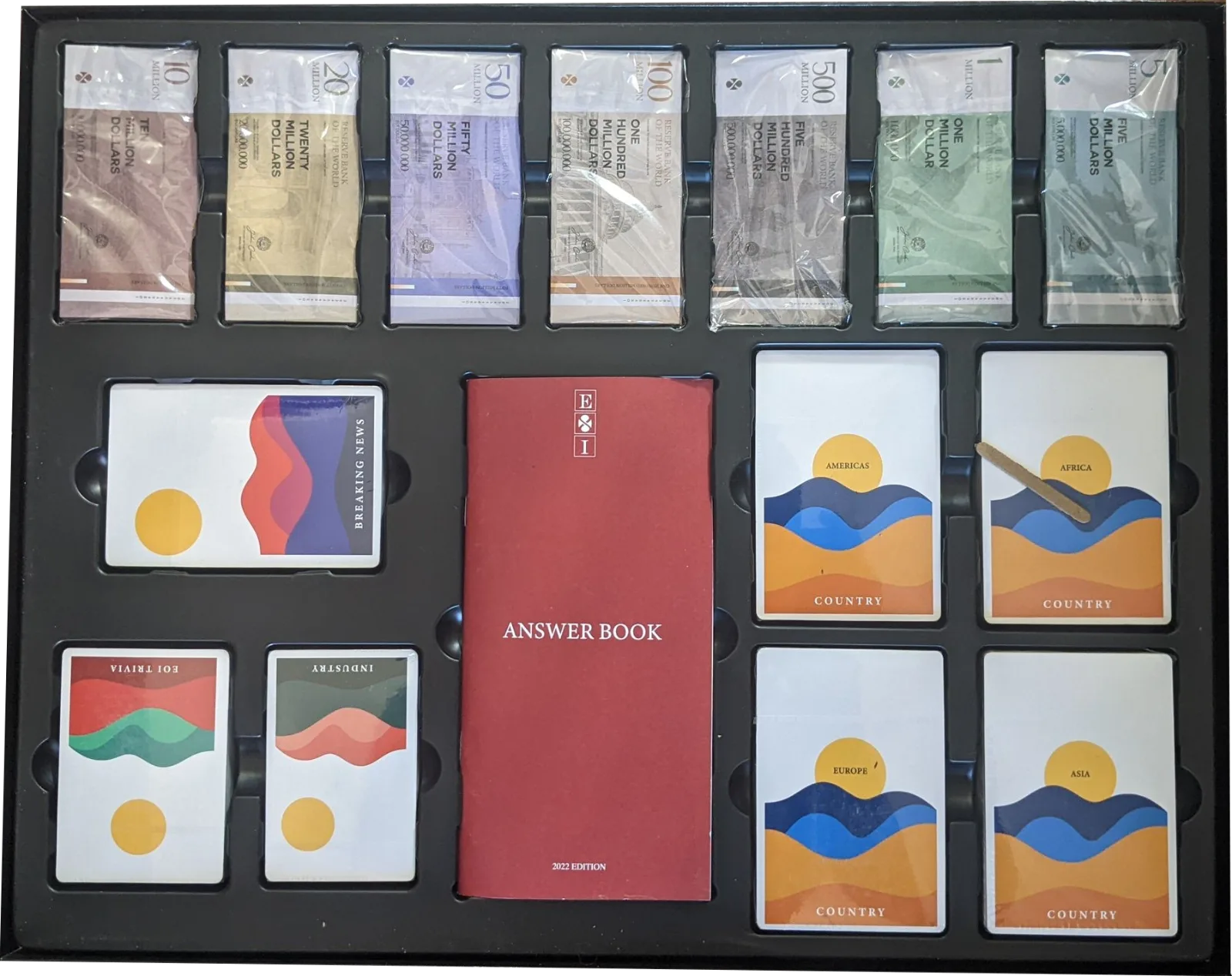
Lesson objective: Students explain one trade-off in an economic decision, use world knowledge to support an argument, and distinguish game rules from real-world complexity. Materials: EOI game if available, board/markers, timer and a one-page student reflection sheet.
00:00–00:05
Introduce a fictional nation with limited money. Ask students: save, invest or bid for an opportunity? Why?
00:05–00:12
Present a suitable question from your copy or a verified geography fact. Discuss how confident students are in their answers.
00:12–00:30
Demonstrate a limited sequence from the official rules. Pause to ask what students gain and what they give up. Do not pretend this is a full-game session.
00:30–00:40
Groups defend one choice and compare the game to how countries, firms or individuals may face trade-offs.
00:40–00:45
Record: one fact learned, one opportunity cost, one assumption the game simplifies, and a question to research.
AFTER CLASS
Research a country-card fact using a current primary source; compare numbers and discuss why data changes over time.
1. What decision did your group make and why?
2. What did you give up by choosing that option?
3. What additional information would have changed your decision?
4. Who benefited and who could have been disadvantaged?
5. Which aspect of real-world economic life was simplified in the game?
Teacher note: use culturally sensitive discussions about colonial histories and power; avoid presenting territorial conquest as a desirable real-world objective. Country-card statistics may become outdated and are best treated as research starting points.
Share your student ages, subject and group size. We can start a discussion about materials and availability.